Electrification puts high voltage and high energy density into vehicles. Both create insulation challenges that conventional materials handle poorly: continuous heat from motors and power electronics, high-voltage stress that can trigger partial discharge, vibration and movement over years of service, and the possibility of a battery cell failing.
YT MICA supplies mica insulation to new-energy vehicle and battery manufacturers, covering the battery pack, the high-voltage distribution system and the electrical machines.
A mica barrier interrupts the heat path at the point where it matters: between one cell and the next, between modules, above the pack, and around the connectors that carry current out of it.
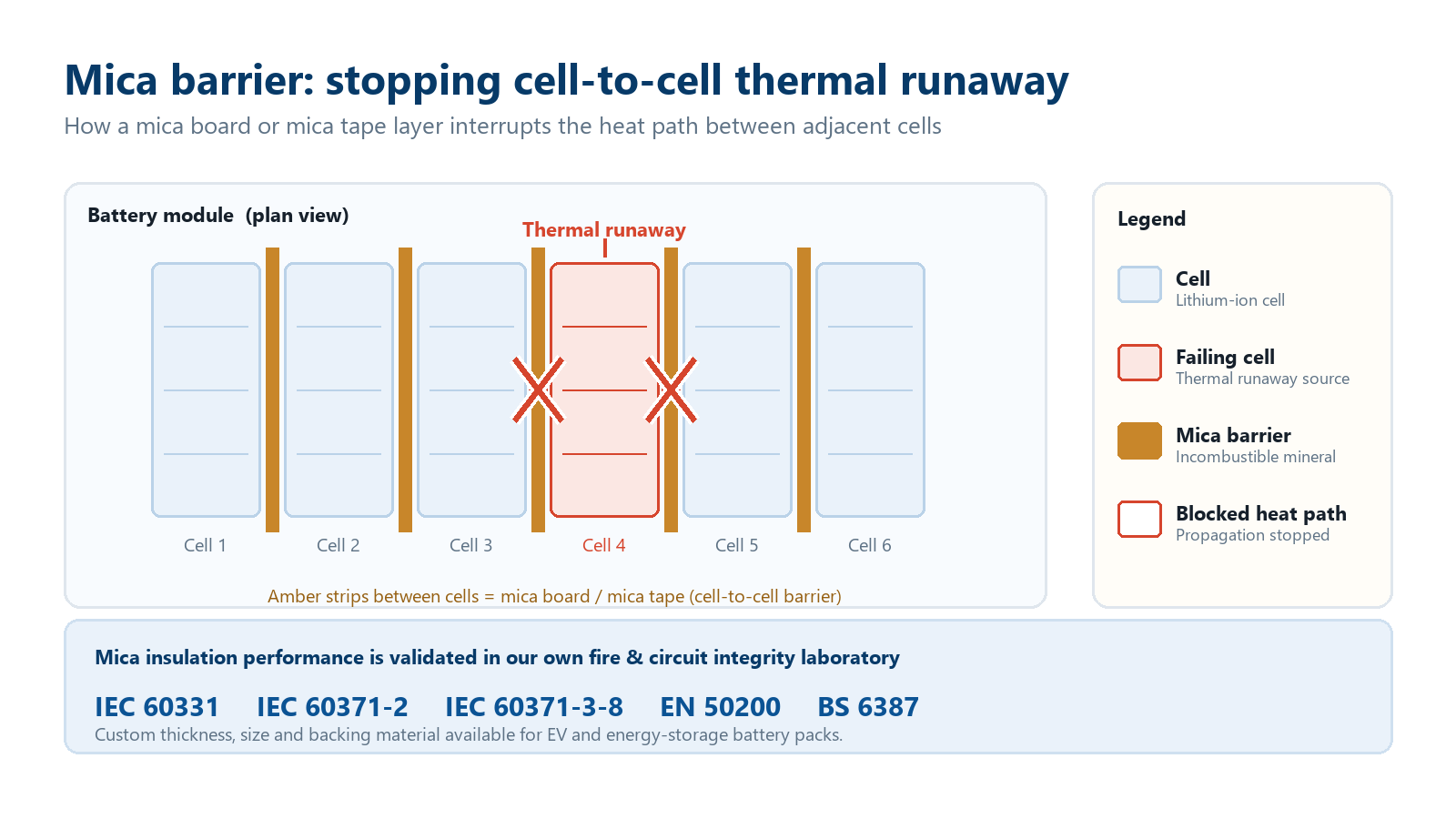
Each level of the pack calls for a different mica form. The material property is the same - resistance to extreme temperature - but it is applied at four different scales.
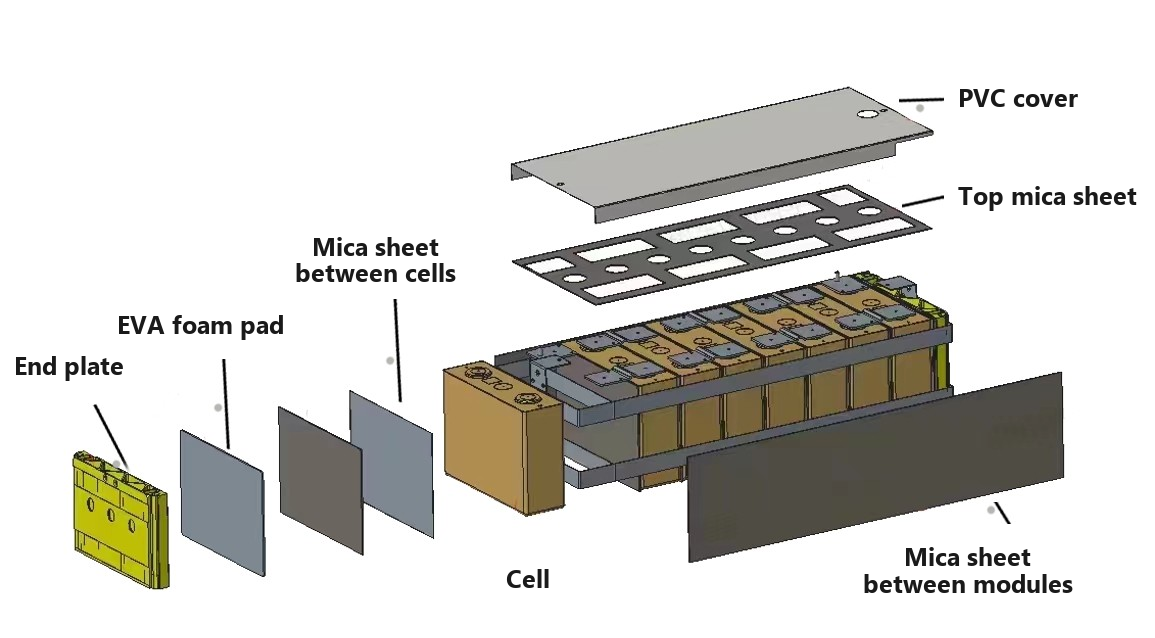
Inside the module, mica sheet separates each cell from its neighbour and from the surrounding hardware. It is cut to the module structure, so it fits closely against the cell surface, provides a dielectric barrier between cells, and assembles without extra tooling.
When a single cell vents, the mica sheet resists the local temperature spike and slows heat transfer to the cell beside it.
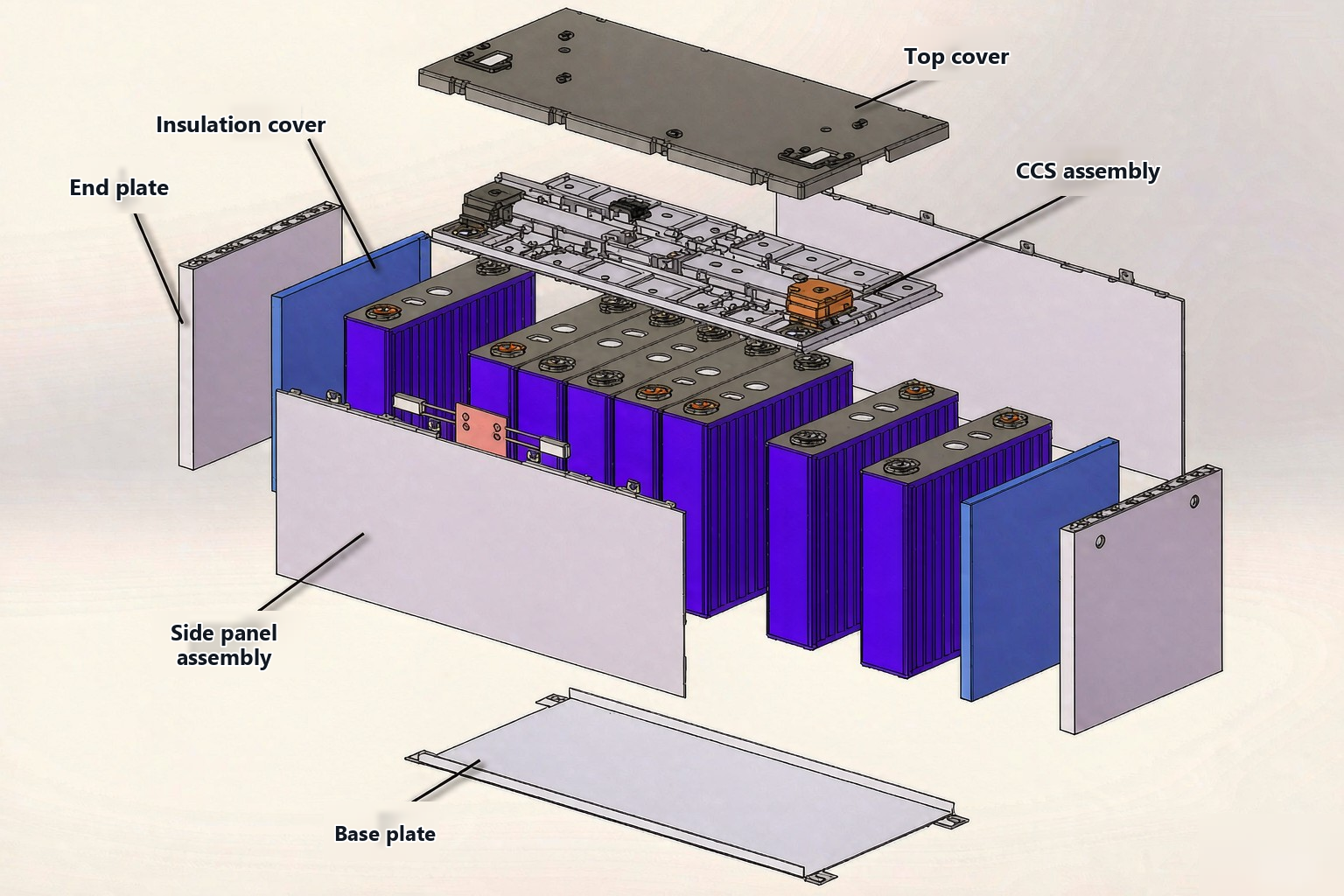
A rigid mica barrier divides the pack into compartments. If one module goes into thermal runaway, the barrier blocks heat from spreading into the modules around it and keeps the event inside a smaller volume.
The result is a contained failure rather than a pack-wide one: fewer modules affected, a lower peak temperature, and more time for the vehicle to respond.
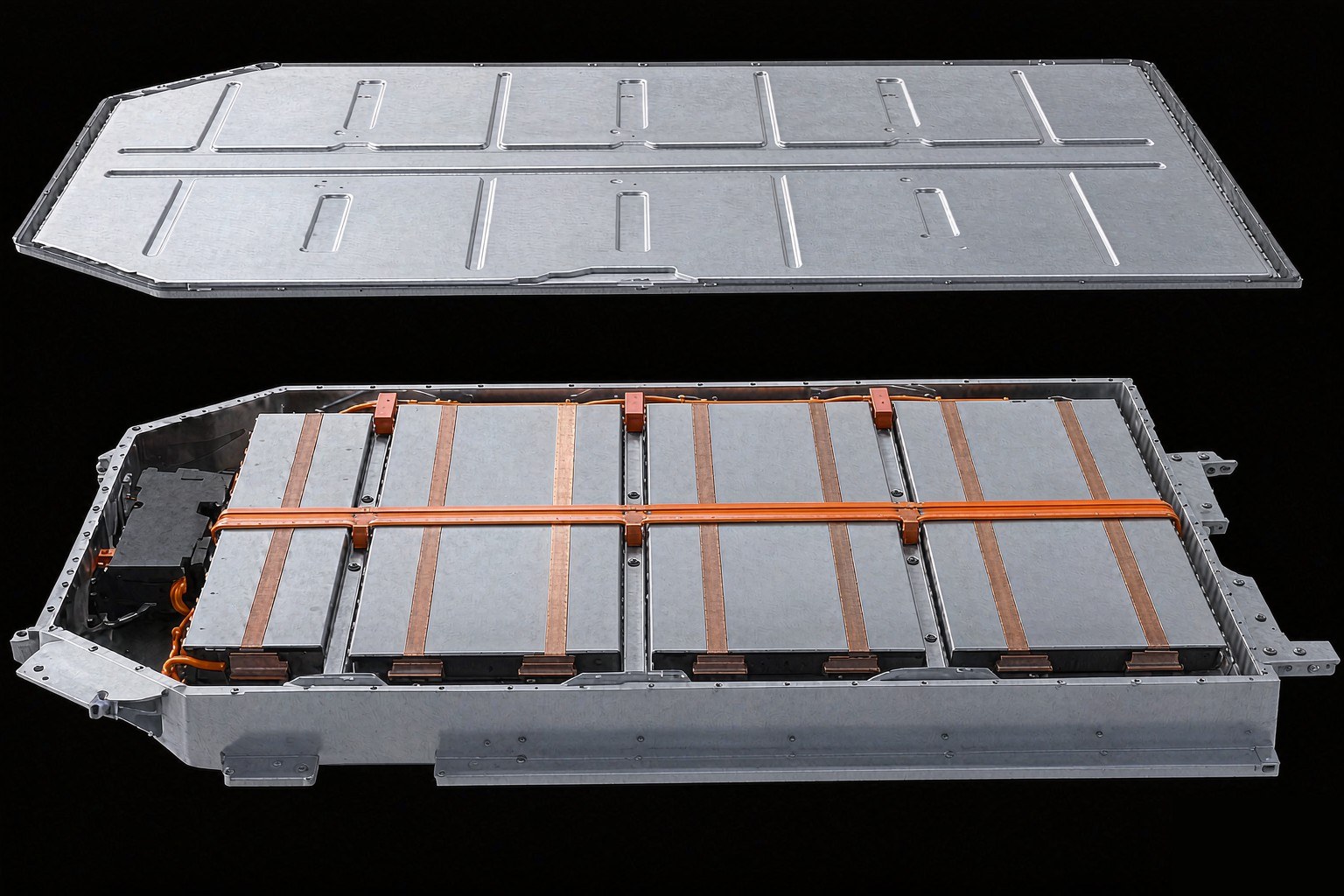
A formed mica plate is bonded under the battery pack lid. The 3D shape follows the cover geometry, so the lid area is covered without leaving unprotected zones.
If a pack goes into thermal runaway and flame is ejected upward, the plate blocks the high-temperature jet and protects the components above and around the cover. Delaying failure of the lid is what creates the escape time.
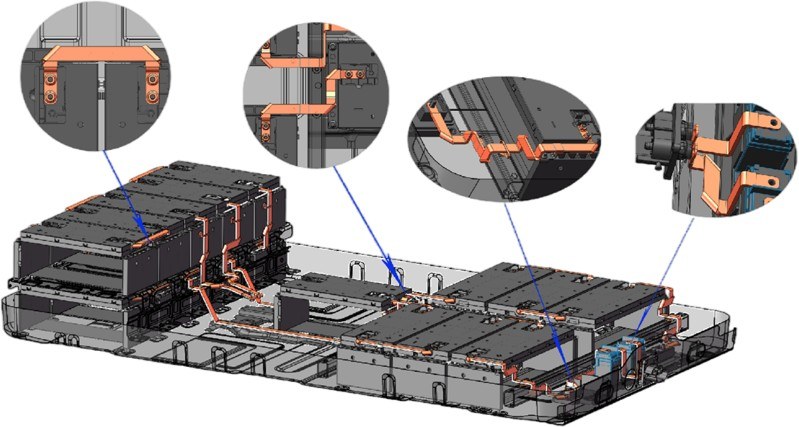
Mica tape wraps the conductor inside the connector, between the terminal and the outer sheath. It is the same tape used in fire-resistant cable construction, applied to a much smaller part.
During a thermal event the tape holds the insulation function of the connector, so the high-voltage path stays intact and the vehicle keeps its circuit integrity for as long as possible.
Cell, module and pack-level barriers that resist heat spread and insulate high-voltage components.
Mica tape wrapping for high-voltage cable runs, resisting corona and partial discharge.
Slot insulation, spacers and barriers that withstand motor operating temperatures.
| Requirement | How mica insulation meets it |
|---|---|
| Electrical insulation | Insulates high-voltage conductors, helping prevent leakage and electric shock |
| Heat resistance | Blocks heat from motors and batteries from reaching sensitive cable insulation |
| Dielectric strength | Resists high-voltage breakdown and electrical fault conditions |
| Durability | Flexible and robust, suited to long-term vehicle movement and vibration |
| Flame resistance | Reduces fire risk in the battery compartment and limits flame spread |
Material selection is confirmed against the vehicle manufacturer's specification and applicable test standards.
Share your thermal and voltage requirements and we will propose a mica insulation system.