


Solutions


Energy Storage
Grid-scale and commercial battery storage systems pack large numbers of cells into racks and containers that must operate safely for years. The insulation inside them has to do two jobs at once: carry high voltage reliably day after day, and act as a barrier if a cell fails.
YT MICA supplies mica-based insulation parts and barriers for energy storage systems, including high-voltage applications where conventional polymer insulation may not be sufficient.
A composite thermal barrier board
Built for battery packs and storage systems, where a single material rarely delivers both high-voltage insulation and effective heat blocking.
The board is a sandwich composite: an insulation core between two support boards, bonded in a single hot-press cycle. The base material withstands continuous service at 950 to 1000 °C, intermittent exposure up to 1250 °C, and reaches a dielectric breakdown strength of 20 kV/mm or more.
It is used for cell-to-cell and module-to-enclosure separation in prismatic, pouch and cylindrical formats, and for fire compartmentation between modules and clusters inside storage cabinets.
Design targets
- Cold-face temperature rise of 80 °C or less with an 800 °C flame on the hot face.
- Thermal conductivity at room temperature of 0.1 W/(m·K) or lower.
- Electrical insulation that holds up in a high-voltage pack environment.
- Lower density than conventional high-density barriers, without losing structural reliability under vibration and ageing.
- A form that installs easily across different module and cabinet layouts.
How the board is built
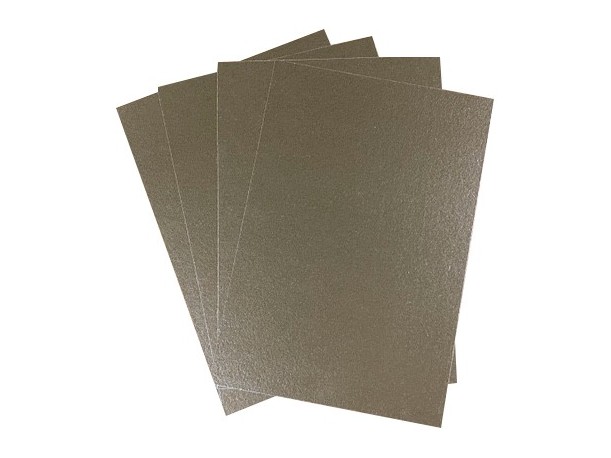
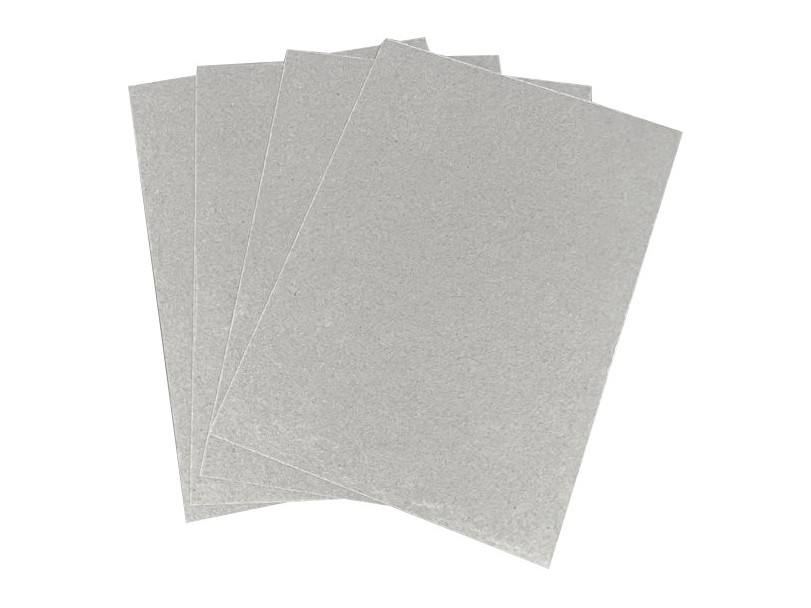
Outer high-strength mica board
High-purity phlogopite mica, formed under high pressure. This layer provides the electrical insulation (20 kV/mm or more) and acts as a structural barrier in open flame, withstanding direct flame above 1000 °C.
Core composite insulation layer
A high-density glass-fibre felt skeleton filled with a modified insulation material. The structure raises thermal resistance while giving the board some flexibility, so it tolerates the vibration it meets in service.
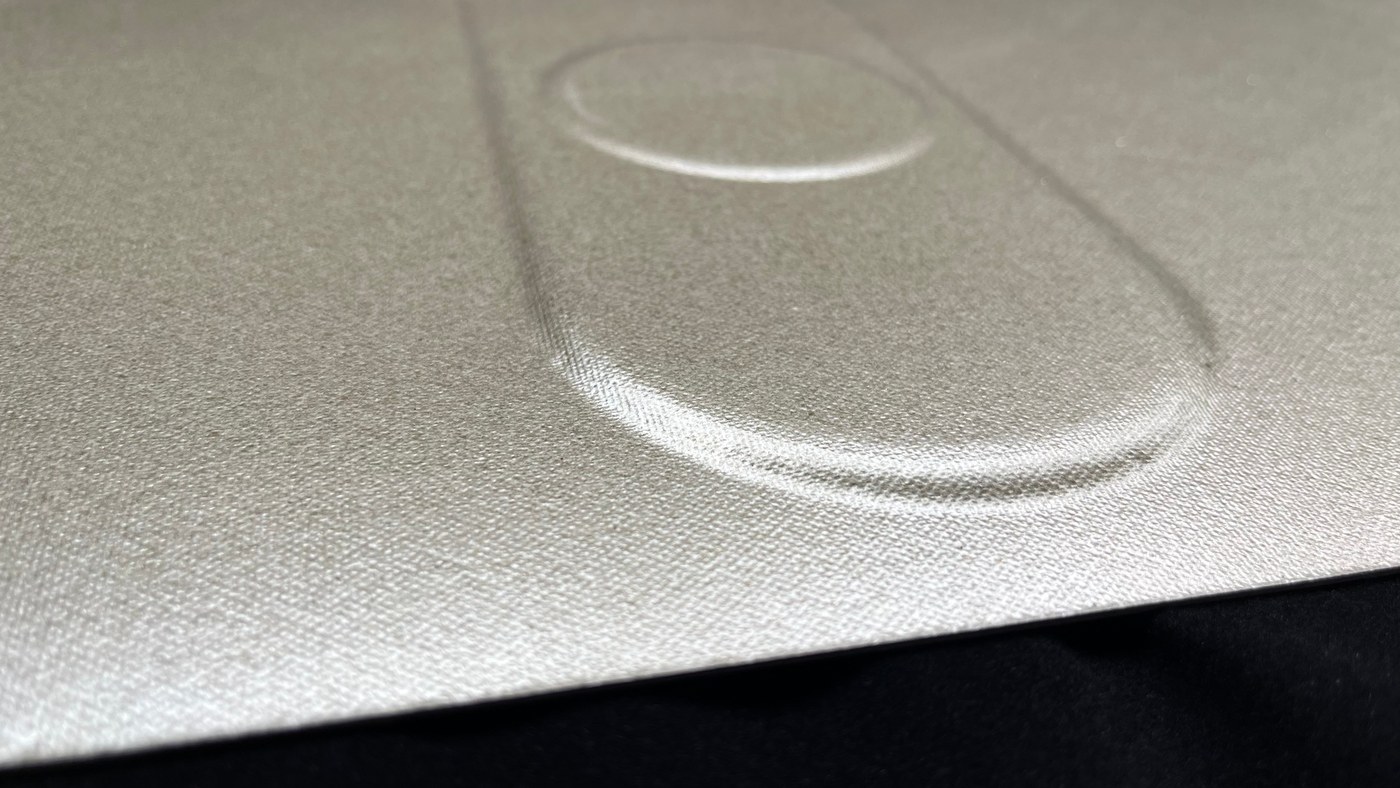
The three layers are bonded by one-piece high-temperature hot pressing, which keeps the panel flat and the layers from separating.
Physical properties
Composite thermal insulation mica board, commercial codes HP5-1R and HP5-1Y.
| Property | Value | Test method / note |
|---|---|---|
| Product name | Composite thermal insulation mica board HP5-1R / HP5-1Y | |
| Construction | Outer high-strength mica board plus composite insulation core, sandwich structure | One-piece high-temperature hot-press forming; structure stays integral |
| Appearance | Rigid flat board, cut to any size | No cracks, no dusting, no visible depressions |
| Bulk density | 1.0 to 1.6 g/cm³ | Depends on the panel structure |
| Thermal conductivity, room temperature | 0.1 W/(m·K) or lower | 25 °C ambient, per the applicable GB/T test method |
| Insulation at 800 °C | Cold-face temperature 80 °C or lower | 800 °C steady state on the hot face |
| Flame resistance | 1100 °C continuous | Outer mica board does not burn or melt in direct flame |
| Dielectric breakdown strength | 20 kV/mm or more | Meets high-voltage insulation requirements of battery systems |
| Insulation resistance | 1.0×10¹² Ω or more | Stable under normal conditions |
| Continuous service temperature | -40 °C to 800 °C | No cracking or significant loss of performance across the range |
| Ageing resistance | Change in thermal conductivity of 5% or less | After 1000 h at 85 °C / 85% RH |
| Standard thickness | 2 mm to 15 mm | Special thicknesses to order |
| Standard sheet size | 1000 × 2000 mm | Custom shapes and pre-drilled parts available |
| Flammability rating | UL94 V-0 | Meets rail transit and new-energy fire safety requirements |
| Layer weight split | Core insulation about 60%, mica layer about 40% | Balances structural strength against thermal performance |
| Installation | Bolt fixing, adhesive backing or slot-in mounting | Pre-formed boards simplify on-site installation |
| Typical applications | Cell and module separation in prismatic, pouch and cylindrical formats; fire compartmentation in storage cabinets | New-energy storage and traction battery systems |
| Storage | Dry, room temperature; avoid prolonged immersion in water | 12-month shelf life |
Values were measured in our own laboratory under standard test conditions, using standard samples on the specified instruments, and are for reference. Performance in service varies with operating conditions, installation and service life. Third-party test reports for a specific project are available on request, and batch values may fall within normal tolerances. The technical specification agreed between both parties governs.
Three positions in a battery system
Inside an EV battery pack
Between cells, and between the module and the enclosure.
Inside a storage system
As a fire barrier between modules, and between battery clusters.
Power electronics
In high-voltage cabinets and converters, wherever a hot zone has to be separated from the parts around it.
Form factor
Cut to size for the module or cabinet layout, with pre-formed boards for faster assembly on site.
Production and quality control
- Process control. The core filling process and the hot-press parameters are controlled batch by batch.
- Batch testing. Every batch is checked against our internal standard before dispatch: 800 °C rear-face temperature rise, flame resistance, and dielectric breakdown strength.
- Custom validation. For a specific customer structure we carry out size design and material-level validation alongside the customer's own testing.
Other positions we supply
Battery Modules & Racks
Mica barriers and separators between modules and rack levels to limit heat spread.
High-Voltage Busbars
Insulating washers, spacers and formed parts for high-voltage interconnections.
Seamless Fire-Resistant Mica Tube
Our patented seamless mica tube, developed for energy storage and rail transit high-voltage scenarios.
BMS & Sensing Lines
Precision insulation parts for battery management and monitoring circuits.
What to look for in storage insulation
- Long-life stability. Insulation must hold its properties over many years of continuous operation.
- Fire behaviour. Incombustible materials reduce the consequence of a cell failure.
- High-voltage capability. Dielectric strength matched to the system voltage.
- Low toxicity. Halogen-free, low-smoke materials for enclosed installations.
- Dimensional consistency. Parts that assemble reliably at scale.
We work with storage system integrators and battery manufacturers to match mica grade and part form to the thermal and electrical duty of each position in the system.
Designing a storage system?
Our engineers can advise on mica insulation for module, rack and high-voltage positions.